.png)
Audit-Proof Your Books: 5 Simple Habits to Keep the IRS Away
Let's be honest, no one wants to hear from the IRS. Even the phrase "IRS audit" is enough to make most business owners break out in a cold sweat. But here's the good news: you don't need to live in fear of an audit. With a few simple habits built into your daily routine, you can keep your books clean, accurate, and audit-proof.
I've been working with small business owners for years, and I've seen firsthand what catches the IRS's attention (and what doesn't). The secret isn't complicated accounting tricks or expensive software. It's really just about consistency, accuracy, and having your ducks in a row.
Let's walk through five simple habits that'll help you sleep better at night and keep the IRS far, far away.
1. Keep Digital Copies of Everything (Yes, Everything)
Remember that shoe box full of crumpled receipts? Yeah, that's not gonna cut it anymore. The IRS wants documentation, and "I'm pretty sure I spent that" isn't going to fly if you ever get audited.

Here's the deal: every business expense needs backup. This is especially true for things the IRS scrutinizes more closely, like travel expenses, meals, entertainment, and vehicle costs. If you can't prove it, you can't deduct it. It's that simple.
Get yourself set up with a system:
Use receipt scanning apps like Dext, Hubdoc, or even just your phone's camera
Save digital copies in organized folders (by month and category works great)
Include notes about what the expense was for, "Lunch with Jane from ABC Co. to discuss Q2 marketing partnership"
Keep records for at least three years (but seven is safer)
I can't tell you how many times a client has thanked me for nagging them about this. When they needed to reference an expense six months later, having everything digitized and organized saved them hours of digging through files.
Pro tip: Take the photo right when you get the receipt. Don't let them pile up in your wallet or car. Future you will thank present you.
2. Use a Payroll Service (Your Sanity Will Thank You)
Payroll is one of those areas where the IRS doesn't mess around. They're looking at whether your payroll taxes match what you actually withheld and paid. Any discrepancies? Red flag city.
Here's why DIY payroll is risky: there are federal taxes, state taxes, unemployment taxes, deposit schedules, quarterly filings, annual filings... it's a lot. Miss one deadline or calculate something wrong, and you're looking at penalties that add up fast.
A good payroll service will:
Calculate all federal and state withholdings correctly
File your taxes on the right schedule
Handle all the paperwork for new hires
Keep you compliant with changing regulations
Generate W-2s and other required forms
Yes, it costs money. But the peace of mind (and the time you save) is worth every penny. Plus, when everything's done right from the start, there's nothing for the IRS to question.
Think of it as insurance against one of the most common audit triggers out there.
3. Match Every Dollar the IRS Already Knows About

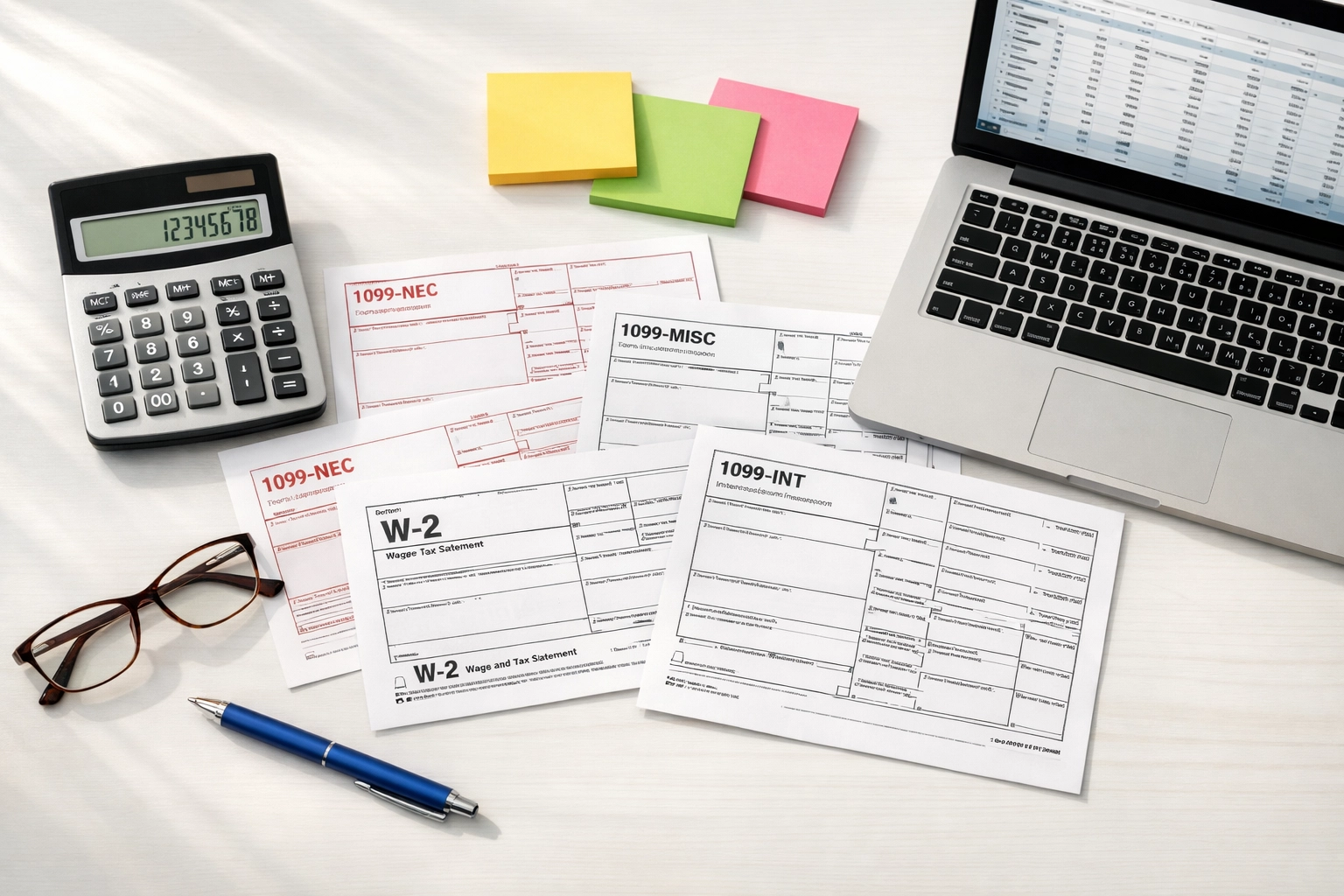
Here's something that surprises a lot of business owners: the IRS gets copies of all those 1099s, W-2s, and other income forms before you even file your return. They have computer systems that compare what you report to what they already know you received.
If the numbers don't match? Audit risk goes way up.
Make this a non-negotiable habit:
Collect all your 1099s, 1099-Ks, and other income statements
Cross-check them against your books before you file
Report every single dollar of income, even if you didn't receive a form for it
If you get a corrected form after filing, amend your return
I've seen clients get notices because they forgot about a small side gig that paid them $800. That 1099-NEC still went to the IRS, even if it didn't make it to their tax preparer. Don't let this be you.
The IRS isn't guessing about your income: they already know most of it. Your job is to make sure your return tells the same story their records do.
4. Get a W-9 Before You Pay Anyone
This is probably the easiest habit on this list, but so many businesses skip it. Here's the rule: before you pay an independent contractor or vendor, get a completed W-9 form from them.
Why? Because at the end of the year, if you've paid them $600 or more, you need to issue them a 1099-NEC. And to do that accurately, you need their legal business name, address, and taxpayer ID number. Guess what form has all that info? The W-9.
Make this your internal policy:
No payment without a W-9 on file (no exceptions)
Keep all W-9s in one secure folder
Review them annually to make sure contact info is current
Use them to prepare accurate 1099s by January 31st
When you have clean W-9s from day one, filing 1099s becomes a breeze instead of a scramble. And accurate 1099s mean you're not creating discrepancies that could trigger questions from the IRS.
Plus, if you ever do get audited, having W-9s on file shows you're running a tight ship. The IRS likes to see that level of organization.
5. Keep Your Books Consistent and Reconciled
This is the big one. Everything else on this list supports this habit: keeping accurate, consistent records that match your tax return.
The IRS has ways of verifying income and expenses. They look at your bank statements, credit card statements, and compare them to what you reported. If your books show $100,000 in revenue but your bank deposits show $120,000, you've got a problem.
Here's your audit-proof bookkeeping checklist:
Reconcile your bank accounts every single month (not just at year-end)
Reconcile credit cards too: those are accounts that need matching
Make sure every transaction is categorized correctly
Don't mix personal and business expenses (separate accounts, people!)
Keep a consistent method: don't switch between cash and accrual randomly
Review your P&L and Balance Sheet regularly for anything that looks weird
When tax time comes, your books should tell the exact same story as your tax return. If your tax preparer has to make a bunch of adjustments to get your numbers to work, that's a sign your books need help.
Remember: the IRS doesn't care if your bookkeeper quit or your QuickBooks crashed. They expect your records to be accurate and provable. Period.
The Bottom Line
Audit-proofing your books isn't about paranoia: it's about being a smart business owner. These five habits aren't complicated, but they do require consistency. Build them into your routine now, and you won't have to panic later.
The businesses that get audited (and struggle through it) are usually the ones who treated bookkeeping as an afterthought. Don't be that business. Take these habits seriously, and you'll dramatically reduce your audit risk while also having a much clearer picture of your business finances.
And honestly? When your books are clean and organized, you just run your business better. You make smarter decisions, you spot problems earlier, and you don't dread tax season. That's worth it all by itself.
Need help getting your bookkeeping systems audit-ready? That's literally what we do. Check out our resources and services to see how we can help you build these habits and keep your books in great shape year-round.
Comments