.png)
Estimated Tax Payments: How to Calculate (and Pay) Them Without the Stress
Let's talk about one of the most confusing parts of being self-employed or running a small business: estimated tax payments. If you've ever wondered why the IRS expects you to pay taxes before you even file your return, you're not alone. And if you're worried about calculating them wrong and getting hit with penalties, I get it, that's a real concern.
The good news? Once you understand the basic rules, estimated taxes aren't nearly as scary as they seem. Let me walk you through exactly how to calculate them, when to pay them, and how to avoid those annoying underpayment penalties.
Do You Even Need to Make Estimated Tax Payments?
First things first: not everyone needs to pay estimated taxes. This requirement usually applies if you're self-employed, a freelancer, an independent contractor, or if you have income that doesn't have taxes withheld (like rental income, investment income, or side gig earnings).
Here's the IRS rule of thumb: You need to make estimated payments if you expect to owe at least $1,000 in federal taxes when you file your return, and your withholding won't cover at least 90% of your current year's tax or 100% of your prior year's tax.
Think about it this way, when you work a W-2 job, your employer withholds taxes from every paycheck. That's basically making estimated payments on your behalf throughout the year. When you're self-employed, nobody's doing that for you, so the IRS wants you to pay as you go instead of waiting until April.

The Two Methods: Pick Your Path
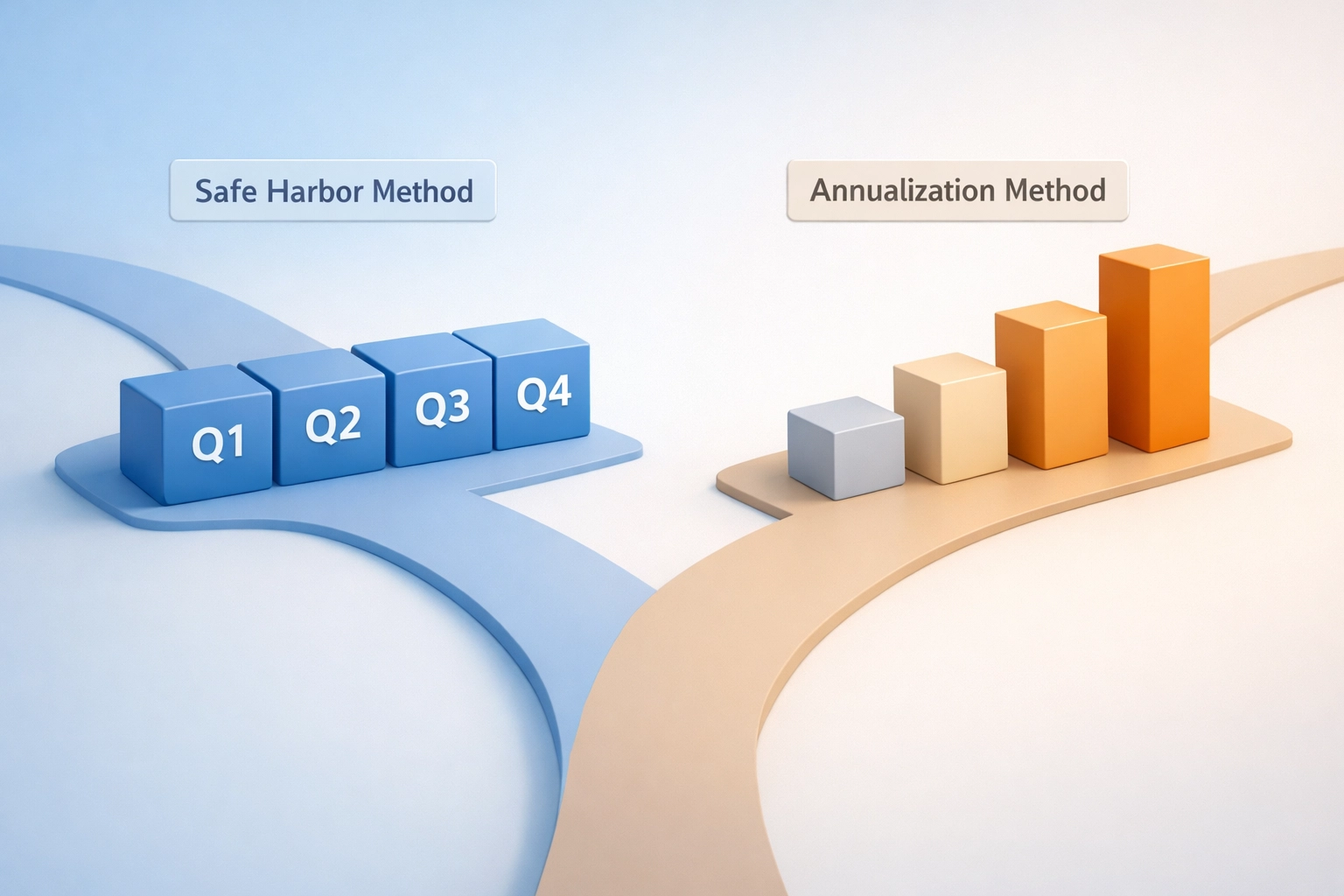
There are two main ways to calculate your estimated tax payments, and you get to choose whichever one works better for your situation.
Method 1: The Safe Harbor Method (Based on Last Year)
This is the simpler option and my favorite for clients who want predictability. Take your total tax from last year's return and divide it by four. That's your quarterly payment.
Example: If you owed $20,000 in total tax last year, you'd pay $5,000 per quarter this year.
There's one catch though, if your adjusted gross income (AGI) was more than $150,000 last year (or $75,000 if married filing separately), you need to pay 110% of last year's tax divided by four.
Same example with high income: $20,000 × 110% = $22,000 ÷ 4 = $5,500 per quarter.
The beauty of this method is that even if your income skyrockets this year, you won't face underpayment penalties as long as you hit that safe harbor amount. You might owe a chunk when you file, but you won't get penalized for not paying enough throughout the year.
Method 2: The Annualization Method (Based on Current Year)
This method is for people whose income varies significantly throughout the year. Maybe you're a landscaper who makes most of your money in spring and summer, or a retail business that has a huge fourth quarter.
With annualization, you calculate and pay taxes based on what you've actually earned each quarter. At the end of Q1, you pay taxes on Q1 earnings. At the end of Q2, you pay taxes on your combined Q1 and Q2 earnings (minus what you already paid). And so on.
This requires more math and you'll need to use the Annualized Estimated Tax Worksheet in IRS Publication 505 or Form 1040-ES. But if your income is unpredictable, it can save you from overpaying early in the year.
How to Actually Calculate Your Payment Amount
Okay, so you know which method you want to use. Now let's talk about what you need to figure out the actual dollar amount:
You'll need:
Your prior year's federal tax return (especially helpful for Method 1)
Records of any tax withholding from W-2 jobs or other sources
Your estimated income for the current year
Your estimated deductions and credits
Here's a simplified calculation for Method 1:
Look at last year's tax return, specifically the "Total Tax" line
Divide that number by 4
If your AGI was over $150,000, multiply by 110% first, then divide by 4
Subtract any withholding you expect to have this year
That's your quarterly payment
For Method 2, you'll honestly want to use tax software or work with an accountant because the annualization calculations get complicated fast.
The Magic Numbers: Avoiding Underpayment Penalties
Nobody wants to pay penalties, so let's talk about the magic numbers that keep you safe.
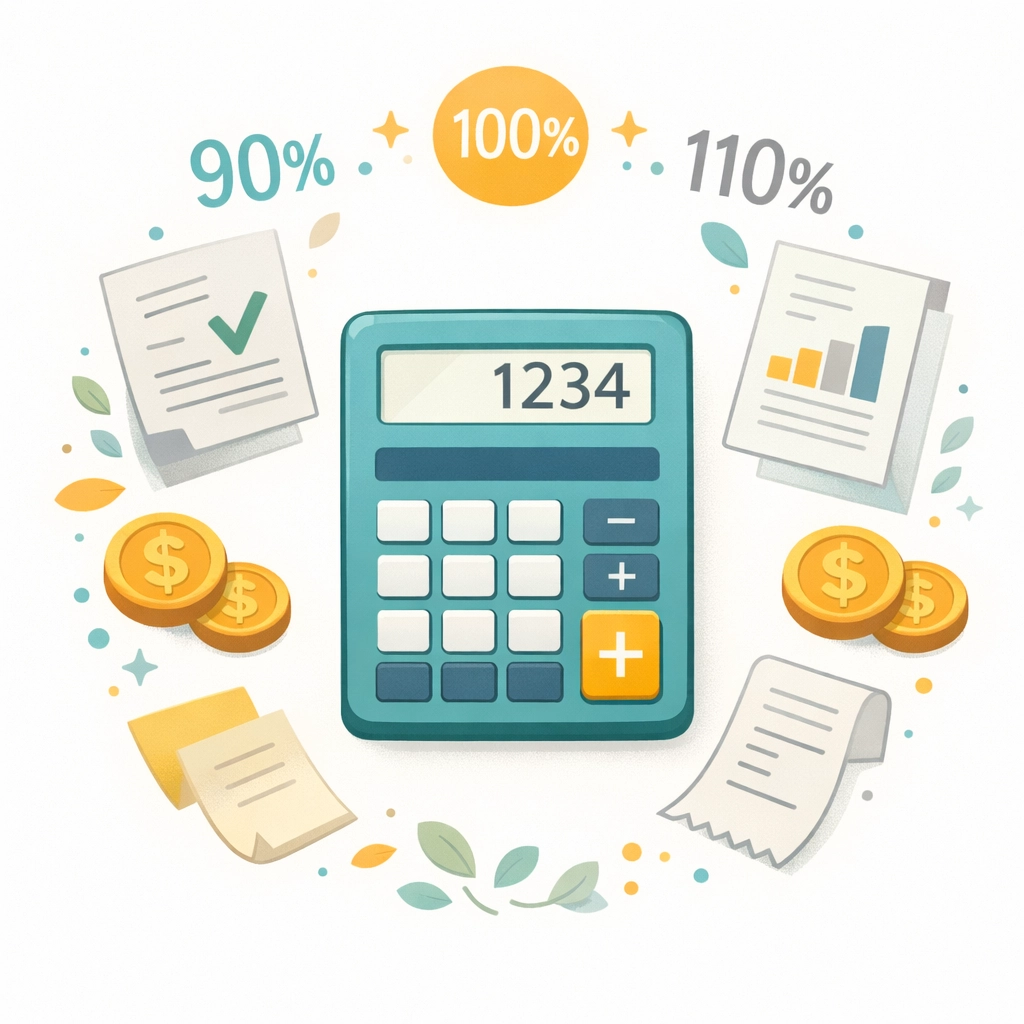
To avoid underpayment penalties, your total payments for the year (estimated taxes plus any withholding) need to equal one of these:
90% of your current year's tax, OR
100% of your prior year's tax (if your prior year AGI was $150,000 or less), OR
110% of your prior year's tax (if your prior year AGI was over $150,000)
Notice the "OR" there, you only need to hit ONE of these thresholds, not all of them.
Pro tip: If your income is going up this year, aim for 100% of your current year's estimated tax to stay safe. If your income is dropping, you can get away with 90% of current year tax. But I always recommend staying a bit above these minimums just to give yourself a cushion.
When Are These Payments Due?
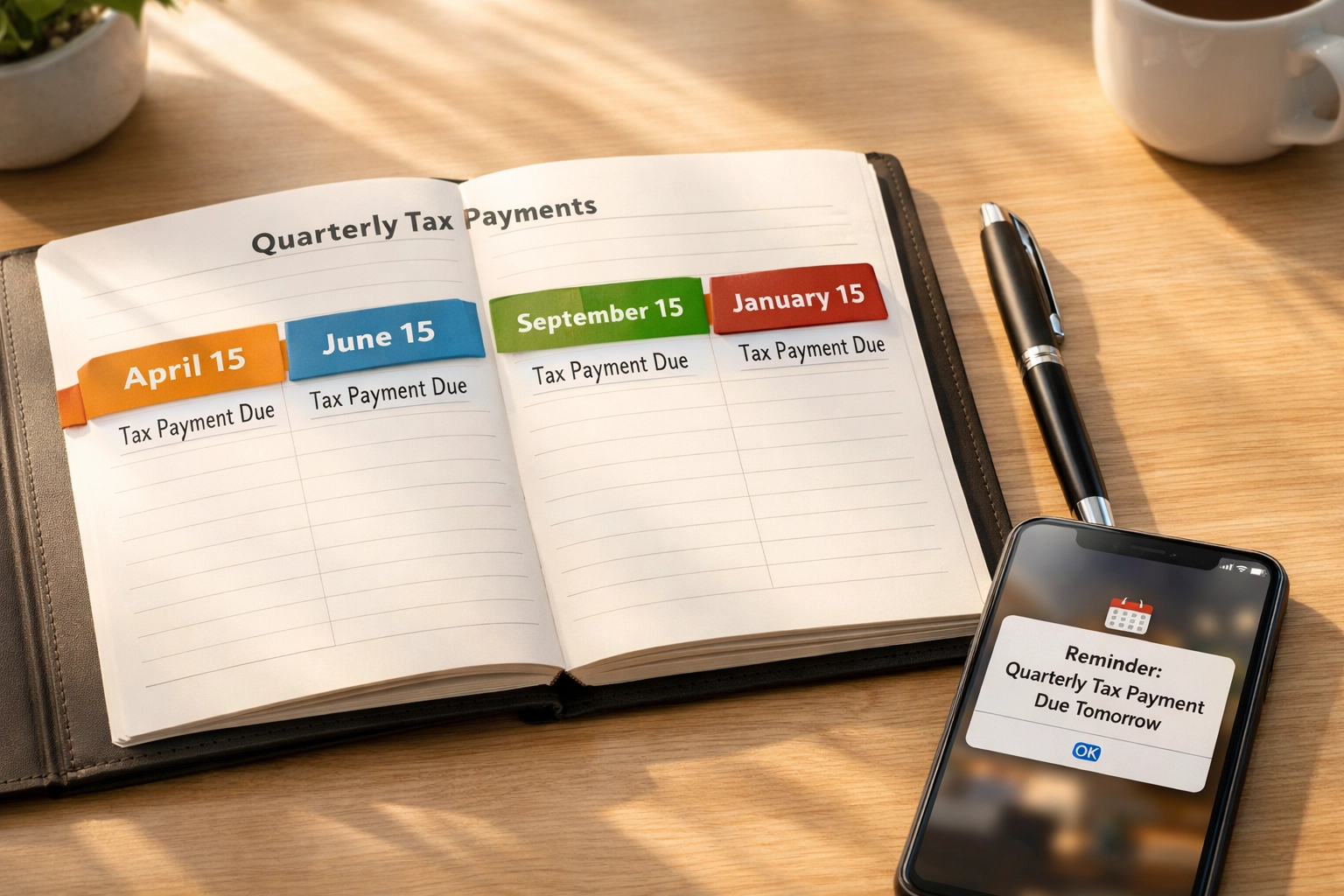
Estimated tax payments are due four times a year, but the quarters aren't exactly three months apart (because the IRS likes to keep us on our toes):
April 15 – First quarter (January 1 - March 31)
June 15 – Second quarter (April 1 - May 31)
September 15 – Third quarter (June 1 - August 31)
January 15 (of the following year) – Fourth quarter (September 1 - December 31)
If any of these dates fall on a weekend or holiday, the deadline moves to the next business day.
Here's something important: you don't have to make equal payments each quarter if that doesn't match your income flow. But if you miss an early deadline, you might still get hit with a penalty for that specific quarter, even if you catch up later. The IRS calculates penalties quarter by quarter.
How to Actually Pay (The Easy Part)
Once you know how much you owe, paying is actually the easiest part. The IRS gives you several options:
Electronic options (my recommendations):
IRS Direct Pay – Free, pulls directly from your bank account, super simple
EFTPS (Electronic Federal Tax Payment System) – Requires setting up an account but gives you a payment history
IRS2Go mobile app – Pay from your phone
Credit or debit card – Through approved payment processors (note: these charge convenience fees)
Old school option:
Mail a check with Form 1040-ES payment voucher
I always recommend setting calendar reminders for a week before each deadline. Or better yet, automate your payments through EFTPS so you never miss one.
Quick Tips to Make This Easier
Start simple: If this is your first year making estimated payments, use the safe harbor method based on last year's tax. It's straightforward and keeps you penalty-free.
Adjust as you go: If you have a big income jump mid-year (like landing a huge client), increase your remaining quarterly payments to stay safe.
Keep records: Save confirmations of every payment you make. The IRS occasionally "loses" payments, and you'll want proof.
Consider working with a pro: If your income is complicated or highly variable, a good accountant or bookkeeper can help you nail these calculations and save you stress. That's literally what we do all day, and we're good at it.
The Bottom Line
Estimated tax payments don't have to be stressful. Pick your calculation method, set those calendar reminders, and pay on time. Yes, it feels weird to pay taxes on money you haven't fully earned yet, but it beats getting hit with a massive tax bill and penalties come April.
And remember: if you're ever unsure about your calculations, it's better to pay a little extra than to underpay and face penalties. You'll get any overpayment back when you file your return (or you can apply it to next year's estimates).
Need help figuring out your estimated payments or getting your books in order so you actually know what to pay? That's exactly what we help business owners with every day at Your Business Accountant. No judgment, just practical help getting your taxes handled right.
Comments