.png)
Stop Scrambling in April: Try These 7 Year-Round Tax Prep Hacks
Let's be honest, most of us treat tax prep like a fire drill. April rolls around, and suddenly we're frantically digging through shoeboxes, hunting down receipts, and stress-eating our way through extension forms.
But here's the thing: tax preparation doesn't have to be a once-a-year panic attack. With a few simple habits built into your routine, you can make tax season feel like just another Tuesday. No drama, no all-nighters, and definitely no shoebox excavations.
Ready to ditch the April scramble? Let's dive into seven year-round tax prep hacks that'll make your life so much easier.
Hack #1: Create Your "Tax Command Center" (And Actually Use It)
Stop throwing receipts into random drawers and hoping for the best. Right now, yes, right now: set up a dedicated system for organizing your tax documents throughout the year.
This could be as simple as labeled file folders (one for income documents, one for receipts, one for investment statements) or as high-tech as a bookkeeping software like QuickBooks Online. The key is picking a system and sticking with it from day one.

Here's the game plan: As soon as a tax-related document comes in: whether it's a receipt, invoice, or statement: file it immediately. Don't let it sit on your desk "just for now." That's how paperwork black holes happen.
Pro tip: Take photos of paper receipts and back them up digitally. Paper fades, coffee spills happen, and your dog might mistake that important receipt for a chew toy.
Hack #2: Schedule Quarterly "Tax Dates" With Yourself
Think of these as check-ins to make sure you're on track. You don't need to do anything complicated: just carve out an hour every three months to review where you stand.
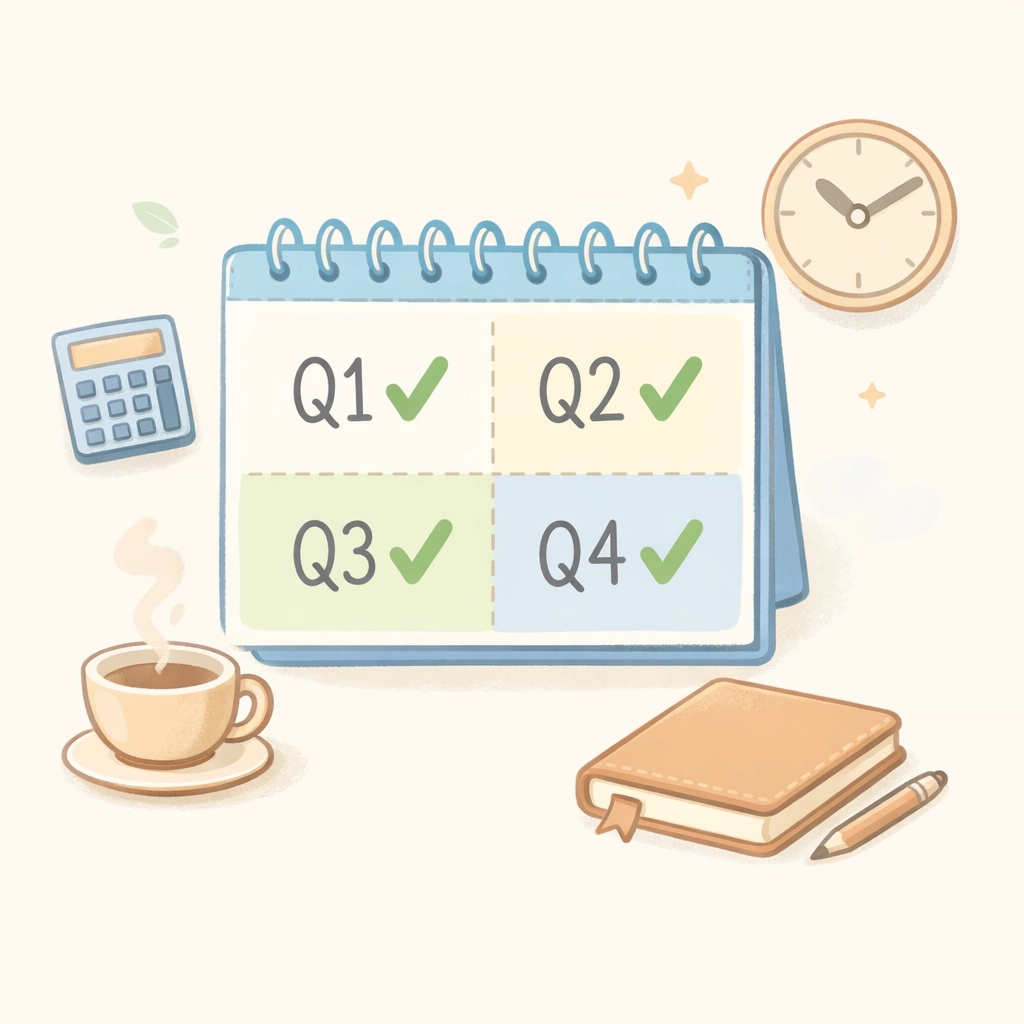
Here's a simple quarterly schedule:
Q1 (January-March): Review last year's return and identify what you want to do differently this year
Q2 (April-June): Check your estimated tax payments and make sure your withholding is on target
Q3 (July-September): Start thinking about year-end planning and what moves you might want to make
Q4 (October-December): Execute your plan before the December 31 deadline
These quarterly reviews help you catch issues early when they're easy to fix, not in April when it's too late to do anything about them.
Hack #3: Front-Load Your Retirement Contributions
One of the easiest ways to reduce your tax bill is maxing out your retirement account contributions: but most people wait until the end of the year to do it. Big mistake.
Contributing early in the year gives your money more time to grow tax-deferred. Plus, it reduces your taxable income right away, which can help you stay in a lower tax bracket.
If you're self-employed, consider setting up a SEP IRA or Solo 401(k) early in the year and making regular contributions. If you're an employee, adjust your 401(k) contributions to front-load them as much as possible (just make sure you don't miss out on any employer match by maxing out too early).
The bottom line: Don't wait until December to think about retirement contributions. Your future self will thank you: and so will your current tax bill.
Hack #4: Track Everything (Seriously, Everything)
If you're a small business owner, documenting expenses throughout the year is non-negotiable. But even if you're a W-2 employee, keeping track of potentially deductible expenses can save you money.
Here's what to track:
Business expenses (supplies, software subscriptions, professional development)
Mileage for business-related driving
Home office expenses if you qualify
Medical expenses (you never know if they'll exceed the threshold)
Charitable donations (including non-cash contributions)
Investment-related expenses
Keep backup documentation for everything. That means receipts, bank statements, and notes explaining what an expense was for if it's not obvious. If the IRS ever comes knocking, they want to see proof: not your best guess from three years ago.
Hack #5: Be Strategic About When You Receive Income
Here's a little-known secret: timing matters when it comes to income. If you're close to jumping into the next tax bracket, deferring income to the following year might keep your current tax bill lower.

This is especially relevant if you're self-employed or have control over when you invoice clients. Sending out invoices in late December vs. early January can make a real difference in your tax situation.
On the flip side, if you expect to be in a higher tax bracket next year (maybe you're starting a new job or your business is growing), it might make sense to accelerate income into the current year when your rate is lower.
A word of caution: Don't let tax strategy override good business practices. If you need the cash flow now, don't defer income just to save a few bucks on taxes.
Hack #6: Master the Art of "Bunching" Deductions
This one's a bit more advanced, but it can seriously boost your tax savings. Here's the concept: instead of spreading deductible expenses evenly across multiple years, you "bunch" them into a single year to exceed the standard deduction, then take the standard deduction in alternating years.
This works especially well for:
Charitable contributions: Make two years' worth of donations in one year
Medical expenses: If you're close to the 7.5% AGI threshold, schedule elective procedures in the same year
State and local taxes: Prepay property taxes or make estimated tax payments in December instead of January
The goal is to alternate between years where you itemize (because your deductions are high) and years where you take the standard deduction. Over time, you'll deduct more than if you'd just taken the standard deduction every year.
Hack #7: Keep Your Tax Preparer in the Loop All Year
Your tax preparer shouldn't be someone you only talk to in March. If you want to avoid surprises and actually benefit from tax planning (not just tax preparation), stay in touch throughout the year.
Schedule quarterly check-ins to discuss:
Major life changes (marriage, home purchase, business expansion)
Big financial decisions on the horizon
Any concerns about estimated tax payments
Questions about specific deductions or credits
Your tax pro can help you make smart decisions in real-time, not six months after the fact when it's too late to course-correct. Plus, when April rolls around, they'll already be familiar with your situation, making the actual filing process way smoother.
The Real Secret? It's All About Habits
Here's the truth: none of these hacks are complicated. They're not secret IRS loopholes or advanced strategies that require a finance degree. They're just good habits.
The business owners and individuals who breeze through tax season aren't necessarily smarter or more organized than you: they just built simple systems that work year-round. They file receipts as they get them. They check in quarterly. They communicate with their tax preparer.
And now, you can too.
Start with just one or two of these hacks. Pick the ones that feel most manageable and build from there. Before you know it, April will roll around and you'll wonder what all the fuss was about.
Need help getting your tax prep systems in place? We'd love to help. Because life's too short to spend it scrambling through shoeboxes every spring.
Comments