.png)
The Home Office Deduction: Are You Leaving Money on the Table?
If you're running a business from home, there's a good chance you're overpaying on your taxes. The home office deduction is one of those tax breaks that can save you hundreds (or even thousands) of dollars, but so many business owners either skip it entirely or don't maximize what they could be claiming.
Let's fix that. Here's everything you need to know about the home office deduction, who qualifies, and how to make sure you're not leaving money on the table.
Who Actually Qualifies for the Home Office Deduction?
First things first: not everyone who works from home can claim this deduction.
If you're a W-2 employee working remotely for a company, I've got bad news: you don't qualify, even if you work from your kitchen table every single day. The Tax Cuts and Jobs Act changed the rules, and starting in 2018 (and still in effect for 2026), employees can no longer deduct unreimbursed business expenses, including home office costs.
The home office deduction is only for self-employed individuals and business owners. That means sole proprietors, independent contractors, freelancers, and anyone filing a Schedule C can potentially claim it.
But there's more to it than just being self-employed. Your home office has to meet two important requirements:
Regular and Exclusive Use
The space you're claiming must be used regularly and exclusively for business. That "exclusively" part trips people up. You can't claim your living room if you also use it to watch Netflix at night. You can't deduct your guest bedroom if Aunt Carol crashes there twice a month.
The IRS wants to see that this space is dedicated to your business, period.
Principal Place of Business
Your home office also needs to be either:
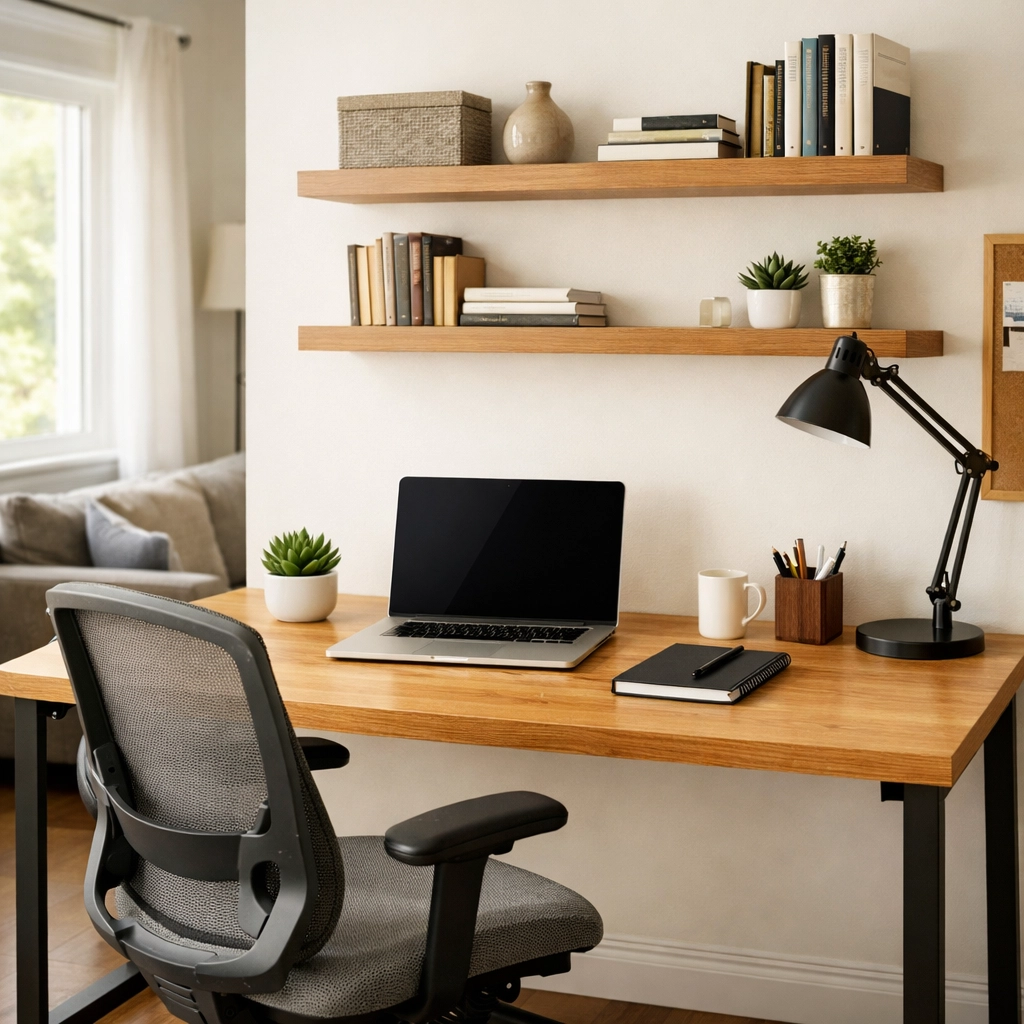
Your principal place of business (where you do most of your work)
A place where you regularly meet with clients or customers
A separate structure used for business (like a detached garage or studio)
If you meet clients at their offices but do all your administrative work, bookkeeping, and planning from home, that counts. Your home office can still be your principal place of business even if you work elsewhere sometimes.
The Two Methods: Simplified vs. Regular
Here's where it gets interesting. The IRS gives you two different ways to calculate your home office deduction, and choosing the right one can make a big difference in your tax savings.
The Simplified Method
This is the easier option. You get to deduct $5 per square foot of home office space, up to a maximum of 300 square feet. That caps your deduction at $1,500 per year.
The math is super straightforward: measure your office, multiply by $5, and you're done. No complicated calculations, no Form 8829, no tracking every single utility bill.
The catch? You don't get to claim depreciation on your home, and you might be leaving money on the table if your actual expenses are higher than what the simplified method gives you.
The Regular Method (Actual Expenses)
This method takes more work, but it often results in a bigger deduction: especially if you have high housing costs or a larger office space.
With the regular method, you calculate what percentage of your home is used for business, then apply that percentage to your eligible expenses. Those expenses include:
Mortgage interest or rent
Property taxes
Homeowners or renters insurance
Utilities (electricity, gas, water, internet)
Repairs and maintenance
Depreciation on the home itself
Let's say your home is 2,000 square feet and your office is 200 square feet. That's 10% of your home. You can deduct 10% of all those indirect expenses.
You also get to deduct 100% of direct expenses: things that only apply to your office space, like painting the office or repairing a window in that room.

Which Method Should You Choose?
Here's my advice: run the numbers both ways.
Seriously. Every year, calculate your deduction using both methods and see which one gives you the bigger tax break. You're allowed to switch between methods from year to year, so there's no long-term commitment.
The simplified method makes sense if:
Your home office is small (under 200 square feet)
You don't have high housing costs
You want to avoid the paperwork hassle
You don't want to deal with depreciation recapture when you sell your home
The regular method typically wins if:
You have a larger dedicated office space
Your housing costs are substantial
You're willing to keep detailed records
The extra deduction outweighs the additional complexity
Let me give you a real example. Say you have a 250-square-foot office in a 2,500-square-foot home (10% business use). Your annual housing expenses are:
Mortgage interest: $12,000
Property taxes: $5,000
Insurance: $1,800
Utilities: $3,600
Repairs and maintenance: $2,000
That's $24,400 in total indirect expenses. At 10%, you'd get to deduct $2,440: plus depreciation. Compare that to the simplified method of $1,250 (250 sq ft × $5), and the regular method clearly comes out ahead.
What If You Only Work from Home Part of the Year?
Good question. Your deduction gets prorated based on how long you actually used the space for business.
If you started your business in October and worked from home for three months, you'd only get a quarter of the annual deduction. That 300-square-foot office that would normally give you $1,500 under the simplified method? You'd only get $375.
Keep this in mind if you're switching between different work arrangements throughout the year.
Renters Can Claim This Too
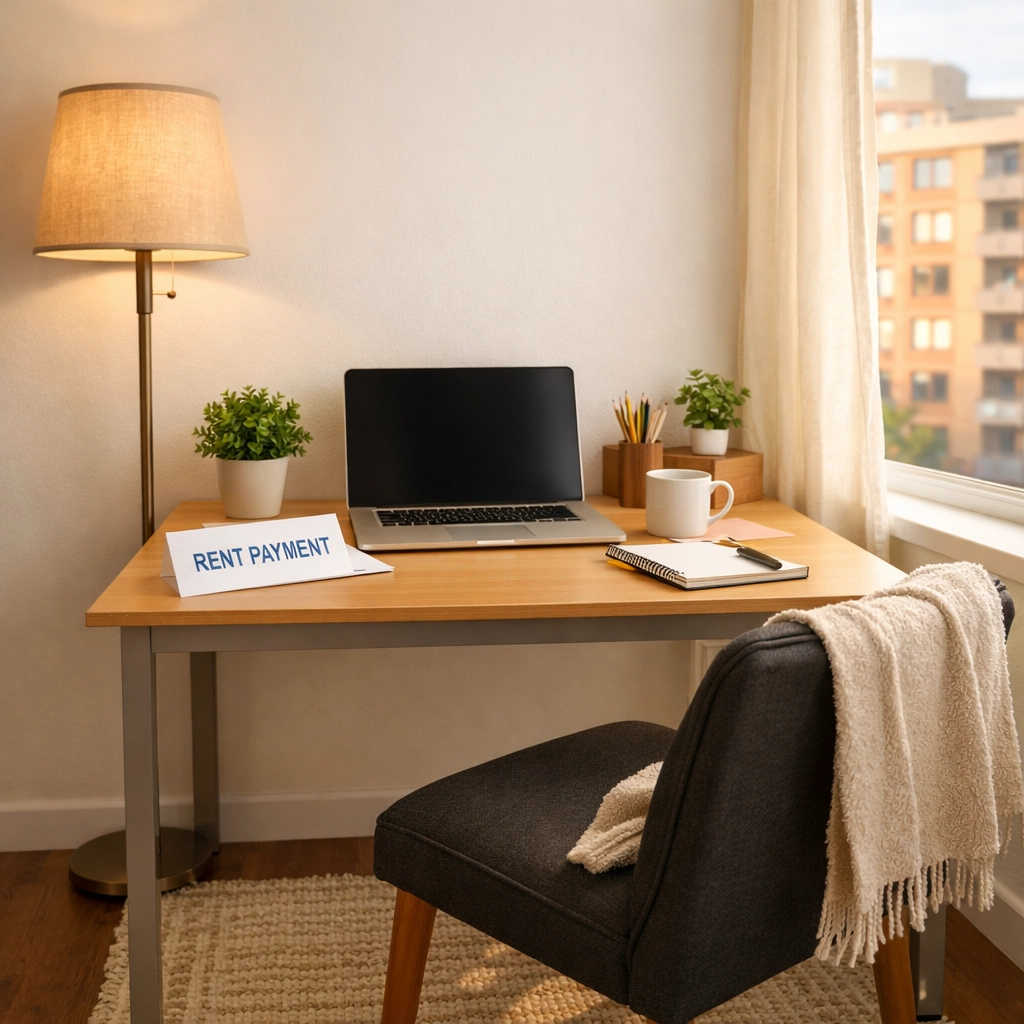
Don't think you're left out just because you don't own your home. Renters absolutely can claim the home office deduction using either method.
With the simplified method, nothing changes: it's still $5 per square foot.
With the regular method, you substitute your rent payments for mortgage interest and property taxes. You can still deduct your portion of utilities, renters insurance, and any repairs you paid for yourself. The only thing you can't deduct is depreciation (since you don't own the property).
Documentation: Protect Your Deduction
If the IRS comes knocking, you need to be able to back up your claim. Here's what you should keep on file:
Measurements and calculations of your office space
Photos of your dedicated home office
Mortgage or rent statements
Utility bills throughout the year
Receipts for direct expenses (office repairs, furniture, equipment)
Evidence that the space is used exclusively for business
I also recommend keeping a log or calendar showing when and how you use the space. It doesn't have to be fancy: just enough to demonstrate regular and exclusive business use.
The more organized your records, the more confident you can be in claiming this deduction. Plus, if you ever do get audited, you'll thank yourself for keeping everything in order.
Don't Leave Money on the Table
Look, I get it. Tax deductions can feel complicated, and the home office deduction has gotten a bad reputation for being an audit trigger. But here's the truth: if you legitimately qualify and you're documenting everything properly, you should absolutely claim it.
This isn't about being aggressive or pushing boundaries. It's about taking a deduction that you're legally entitled to and that can make a real difference in your tax bill.
If you're unsure about whether you qualify or which method to use, that's exactly what I'm here for. We can look at your specific situation, run the numbers, and make sure you're maximizing your deductions without taking on unnecessary risk.
Don't let confusion or fear keep you from claiming what's yours. Your home office is supporting your business: make sure it's supporting your bottom line too.
Need help figuring out your home office deduction?Reach out to us and let's make sure you're getting every dollar you deserve come tax time.
Comments