.png)
Are You Making These Common Bookkeeping Mistakes? 7 Cash Flow Killers Every Small Business Owner Should Avoid
Here's a sobering fact: 82% of small businesses that fail had cash flow problems at the core of their collapse. But here's what's really scary – most of these business owners didn't see it coming.
As someone who's helped hundreds of small business owners get their finances on track, I've seen the same mistakes over and over again. The worst part? These aren't dramatic, obvious errors. They're quiet little bookkeeping habits that slowly strangle your cash flow until one day, you wake up wondering where all your money went.
Let me walk you through the seven biggest cash flow killers I see – and more importantly, how to fix them before they sink your business.
Mistake #1: Playing Financial Russian Roulette (Mixing Personal and Business Money)
I can't tell you how many times I've sat across from a business owner who hands me a shoebox full of receipts and says, "Some of these are business, some are personal, but I can't remember which ones."
When you use your business credit card for groceries or pay for that client dinner with your personal card, you're not just creating extra work – you're setting yourself up for disaster. Here's why:
Tax nightmares: Good luck explaining to the IRS why your "business" account shows charges at Target and your kid's dentist
Missed deductions: That business lunch you paid for personally? If you can't find the receipt or remember to track it, you just threw money away
Audit red flags: Mixed finances make auditors very, very interested in your business
The fix is simple but non-negotiable: Get separate bank accounts and credit cards for your business. Use them exclusively for business expenses. No exceptions, no "just this once."

Mistake #2: The "Set It and Forget It" Bank Statement Approach
I once had a client discover they'd been double-charged for their software subscription for eight months. Eight months! That's money that could have covered payroll during a slow period.
When you don't reconcile your bank and credit card statements monthly, you're flying blind. You might think you have $10,000 in the bank, but if you haven't caught that duplicate payment or bank error, your real balance could be thousands less.
Here's what happens when you skip reconciliation:
Duplicate charges go unnoticed
Bank errors compound
Your cash flow forecasts are worthless
Fraud can continue unchecked
The solution: Block out time every month-end to reconcile. Yes, it's boring. Yes, it takes time. But it's the difference between knowing where you stand and guessing.
Mistake #3: The "Close Enough" Expense Category Game
"I'll just put this software subscription under 'office supplies.' It's close enough, right?"
Wrong. Dead wrong.
When you misclassify expenses, you lose the ability to see where your money actually goes. How can you cut costs if you don't know what you're spending on marketing versus operations? How can you budget for next year if this year's numbers are all mixed up?
This seemingly small mistake leads to:
Inaccurate financial reports
Poor budgeting decisions
Missed tax deductions
Inability to spot spending patterns
The fix: Set up a proper chart of accounts from day one. When in doubt, create a new category rather than forcing something into the wrong bucket. Your future self will thank you.
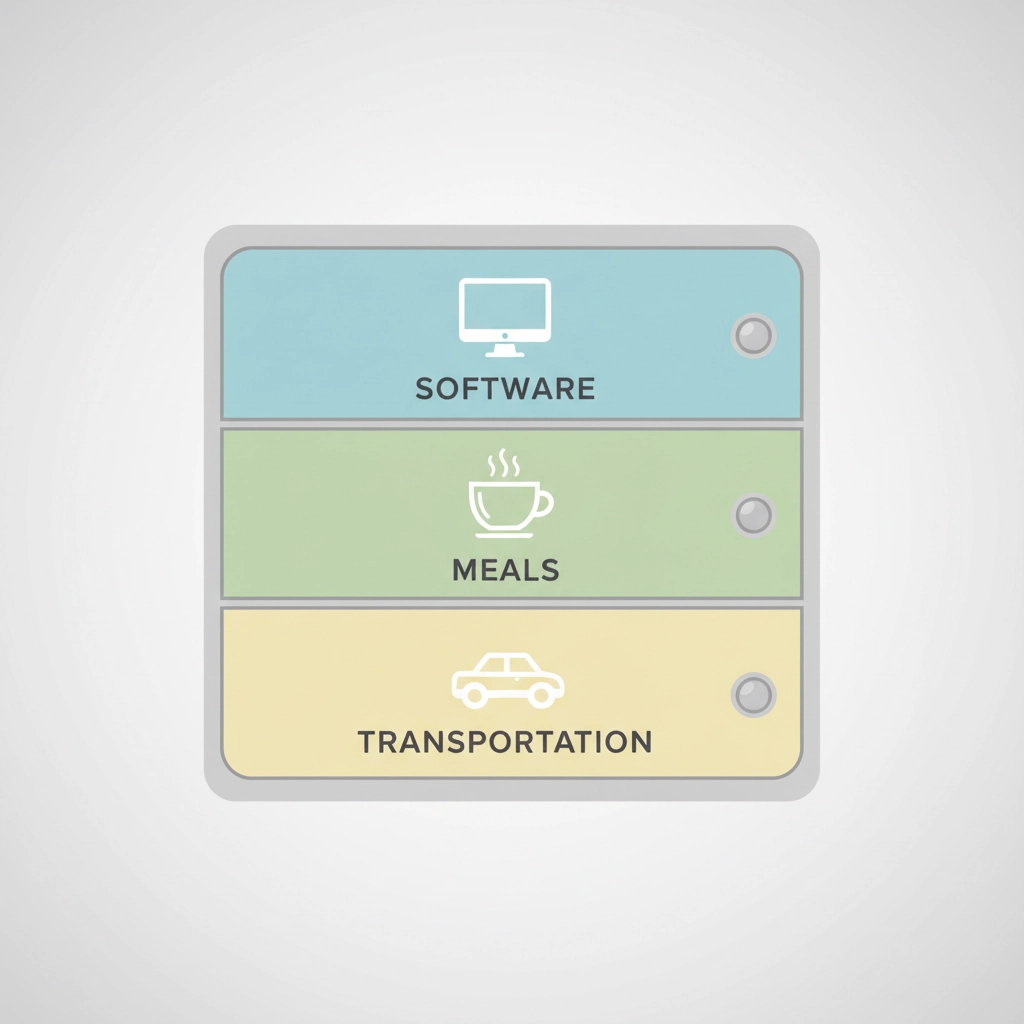
Mistake #4: The "I'll Track It Later" Expense Black Hole
Every business has reimbursable expenses – that conference you paid for out-of-pocket, the client dinner on your personal card, the office supplies you picked up on the weekend. But if you're not tracking these immediately, they disappear into the expense black hole, never to be seen again.
I've watched business owners lose thousands of dollars in reimbursable expenses and tax deductions simply because they didn't have a system to track them as they happened.
The reality check: If you're not tracking reimbursable expenses, you're essentially paying your business to run instead of the other way around.
The solution: Use an expense tracking app or at minimum, a dedicated notebook. Take photos of receipts immediately. Set a weekly reminder to input expenses into your accounting system. Make it a habit, not an afterthought.
Mistake #5: The "My Bookkeeper Handles Everything" Blind Spot
I get it – you started a business to do what you love, not to become an accountant. But here's the thing: if you don't understand your own numbers, you can't make good decisions.
I've seen too many business owners get caught off guard by cash flow problems because they didn't understand what their financial reports were telling them. They trusted their bookkeeper (which is great) but never learned to read the warning signs themselves.
You don't need to become a CPA, but you should understand:
How to read a basic P&L statement
What your cash flow cycle looks like
Which expenses are fixed vs. variable
How your payment terms affect cash flow
The bottom line: Your bookkeeper can keep your books clean, but you need to understand what those books are saying about your business.

Mistake #6: The Silent Cash Flow Assassins
This is where things get really dangerous because these problems often hide in plain sight. Your revenue might be growing, your profit margins look good, but your cash flow is slowly bleeding out.
Common silent killers include:
Payment terms that favor customers over you: Giving customers 60 days to pay while your suppliers want payment in 15 days
Inventory that ties up cash: Having $50,000 in products sitting in your warehouse while you can't make payroll
Seasonal fluctuations you didn't plan for: Great sales in Q4, but what about the dry spell in Q1?
Growth that outpaces cash: Landing that big contract is awesome until you realize you need to buy inventory and pay employees before you get paid
The reality: Fast-growing businesses are especially vulnerable to these cash flow traps because everything looks good on paper until it doesn't.
Mistake #7: The Receipt Disaster (AKA "Shoebox Accounting")
The IRS doesn't require receipts for expenses under $75, but good luck proving your business expenses without them. I've watched business owners lose thousands in legitimate deductions during audits simply because they couldn't provide documentation.
But it's not just about audits. Without proper receipt management, you can't track patterns, identify wasteful spending, or make informed decisions about where to cut costs.
Modern solutions make this easier than ever:
Most accounting software includes receipt-scanning apps
Cloud storage means you'll never lose a digital receipt
Integration with banking means less manual entry
Pro tip: Take a photo of every receipt immediately, even if you plan to keep the physical copy. Digital backups have saved countless clients during audits.
The Real Cost of These Mistakes
Here's what really keeps me up at night: these mistakes don't just cost money – they cost opportunities. When you don't have accurate financial information, you can't:
Secure funding when you need it
Make strategic decisions with confidence
Spot problems before they become crises
Take advantage of growth opportunities
The businesses that thrive aren't necessarily the ones with the best products or services – they're the ones with clean, accurate financial information that lets them make smart decisions quickly.
Your Next Steps
If you recognized your business in any of these scenarios, don't panic. Most of these problems can be fixed with better systems and habits. Start with the basics:
Separate your finances – this week, not next month
Set up monthly reconciliation – put it on your calendar right now
Clean up your chart of accounts – make categories that actually make sense for your business
Implement an expense tracking system – find an app or method that you'll actually use
Remember, perfect bookkeeping isn't the goal – accurate, consistent bookkeeping is. The cost of prevention is always less than the cost of fixing problems after they spiral out of control.
Your business deserves better than guesswork and crossed fingers. It deserves the financial clarity that comes from doing the basics right, every single time.
Comments