.png)
Meet Your (Virtual) Bookkeeping Assistant: How QuickBooks' New AI Agents Are Changing Small Business Accounting
The New Era of Small Business Bookkeeping Has Arrived
Remember when managing your books meant spending Sunday afternoons buried in receipts and spreadsheets? Those days are quickly becoming ancient history. QuickBooks' new AI agents, launched in summer 2025, are revolutionizing how small businesses handle their accounting—and it's about time!
As someone who's spent years helping small business owners untangle their finances, I can tell you this technological shift isn't just another incremental update. It's a complete reimagining of what's possible for small business accounting.
Meet Your New Virtual Accounting Team
Think of QuickBooks' new AI system as hiring a team of specialized virtual assistants who never sleep, never complain, and work with remarkable precision. Here's who's joined your accounting department:
The Bookkeeping Agent
This is your primary numbers wizard. It automatically categorizes transactions, reconciles accounts, flags inconsistencies, and even learns your business patterns over time. When something seems off—like an unusual expense or a potential duplicate—it flags it for your attention without you having to hunt for the needle in the haystack.
The Financial Insights Agent
This is your strategic advisor that transforms raw numbers into actionable business intelligence. It analyzes spending patterns, revenue trends, and profit margins, then delivers insights in plain English: "Your software subscriptions increased 32% this quarter—here's a breakdown of what changed." It even makes suggestions for improving cash flow based on your specific business data.

The Tax Preparation Agent
Tax time no longer means panic mode. This agent tracks tax-relevant transactions year-round, organizes deductions, estimates quarterly payments, and gets your documentation ready for filing. It flags potential audit triggers and suggests legitimate ways to maximize deductions specific to your industry.
The Compliance Assistant
Keeping up with changing regulations is exhausting. This agent monitors regulatory changes relevant to your business size and industry, sends timely reminders for filing deadlines, and helps ensure you're meeting requirements without becoming a regulatory expert yourself.
Real Benefits for Real Small Businesses
The impact of these AI agents goes far beyond the cool factor. Here's what small business owners are actually experiencing:
1. Massive Time Savings
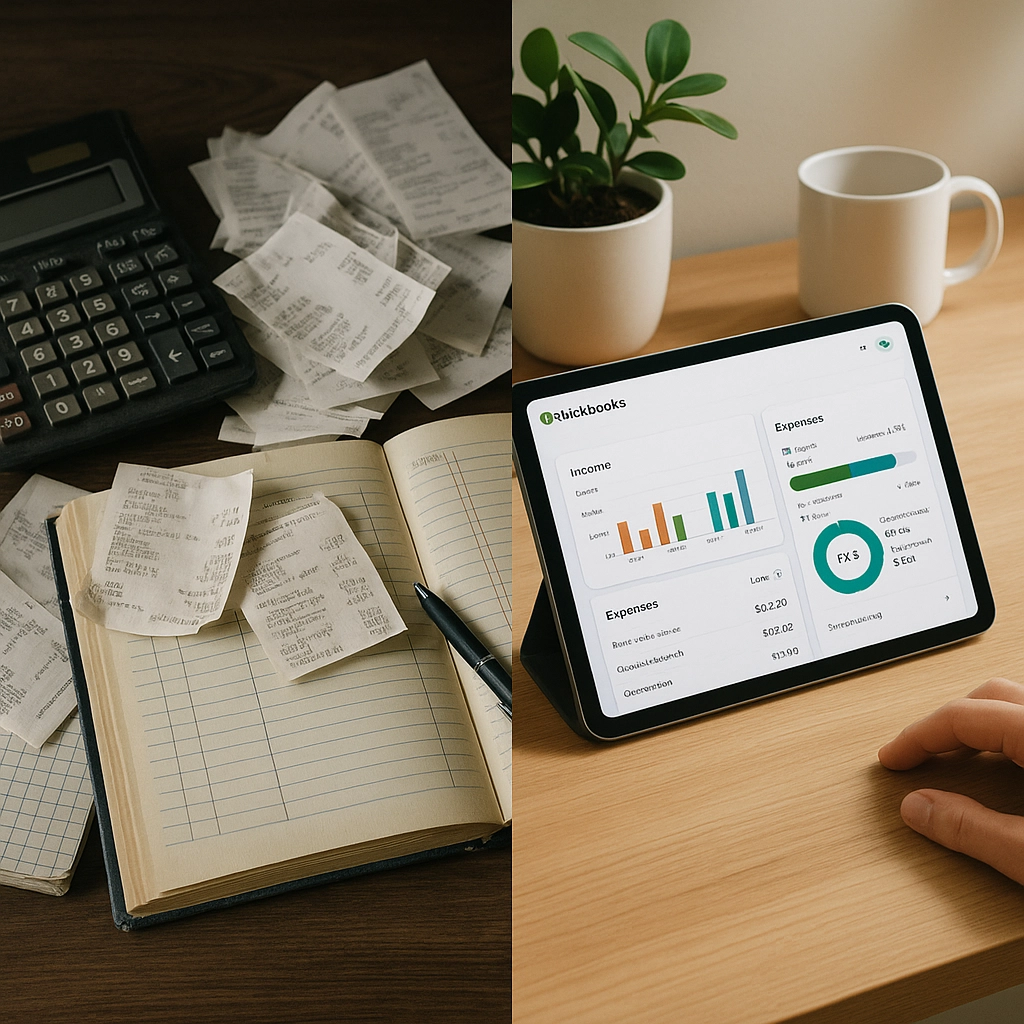
Business owners report saving an average of 10-15 hours monthly on bookkeeping tasks. That's nearly two full workdays you can redirect to actually growing your business rather than managing the books.
2. Reduced Error Rates
Human error in manual bookkeeping is common—we've all miscategorized a transaction or entered a wrong number. AI agents reduce error rates by up to 93%, creating more reliable financial records and reducing the need for costly corrections.
3. Better Financial Visibility
Many business owners tell me they previously made decisions based on incomplete information because thorough financial analysis was too time-consuming. Now, with AI constantly monitoring financial health, they can see the complete picture at a glance.
4. Lower Accounting Costs
While the AI doesn't replace the strategic value of an accounting professional, it does handle the routine work that previously consumed billable hours. This means your accountant can focus on higher-value strategic planning rather than data entry and reconciliation.
5. Improved Cash Flow Management
The AI agents proactively identify opportunities to improve cash flow—flagging late-paying customers, recommending optimal payment timing, and identifying unnecessary expenses. One survey found businesses using these tools improved their cash position by an average of 18% within three months.
How It Actually Works: A Typical Day with Your AI Accounting Team
Let's see how these AI agents function in a real business setting:
7:15 AM: You receive a mobile notification: "Three new transactions processed overnight. Two categorized automatically; one needs your input." With a couple of taps, you confirm the unusual transaction is indeed a legitimate business expense.
10:30 AM: During a client meeting, you need to check if you can afford new equipment. A quick glance at your QuickBooks dashboard shows your current cash position, projected revenue, and what impact the purchase would have on your quarterly budget.
1:45 PM: The AI sends an alert that a major client's invoice is now 10 days overdue, with an option to send an automatic reminder. You approve, and the system handles the follow-up communication.
4:30 PM: You receive a notification that your quarterly tax estimate has been calculated based on current income, with the payment deadline approaching. With one click, you schedule the payment.
7:20 PM: While relaxing at home, you ask a quick question through the QuickBooks app: "How did this month compare to the same month last year?" The AI provides a concise summary of key differences in revenue, expenses, and profitability.
The Human-AI Partnership: Where Your Accountant Fits In
Despite all this automation, human accounting professionals aren't becoming obsolete—their role is evolving. At Your Business Accountant, we're embracing this shift to provide even more value to our clients.
The AI handles data collection, categorization, and basic analysis—the time-consuming tasks that previously limited how much strategic guidance we could provide. This frees us to focus on the human elements that AI can't replace:
- Strategic tax planning tailored to your personal and business goals
- Financial decision making that considers qualitative factors beyond the numbers
- Complex compliance issues requiring professional judgment
- Business growth planning that integrates financial and non-financial considerations
- Personalized advice that considers your risk tolerance, values, and long-term vision
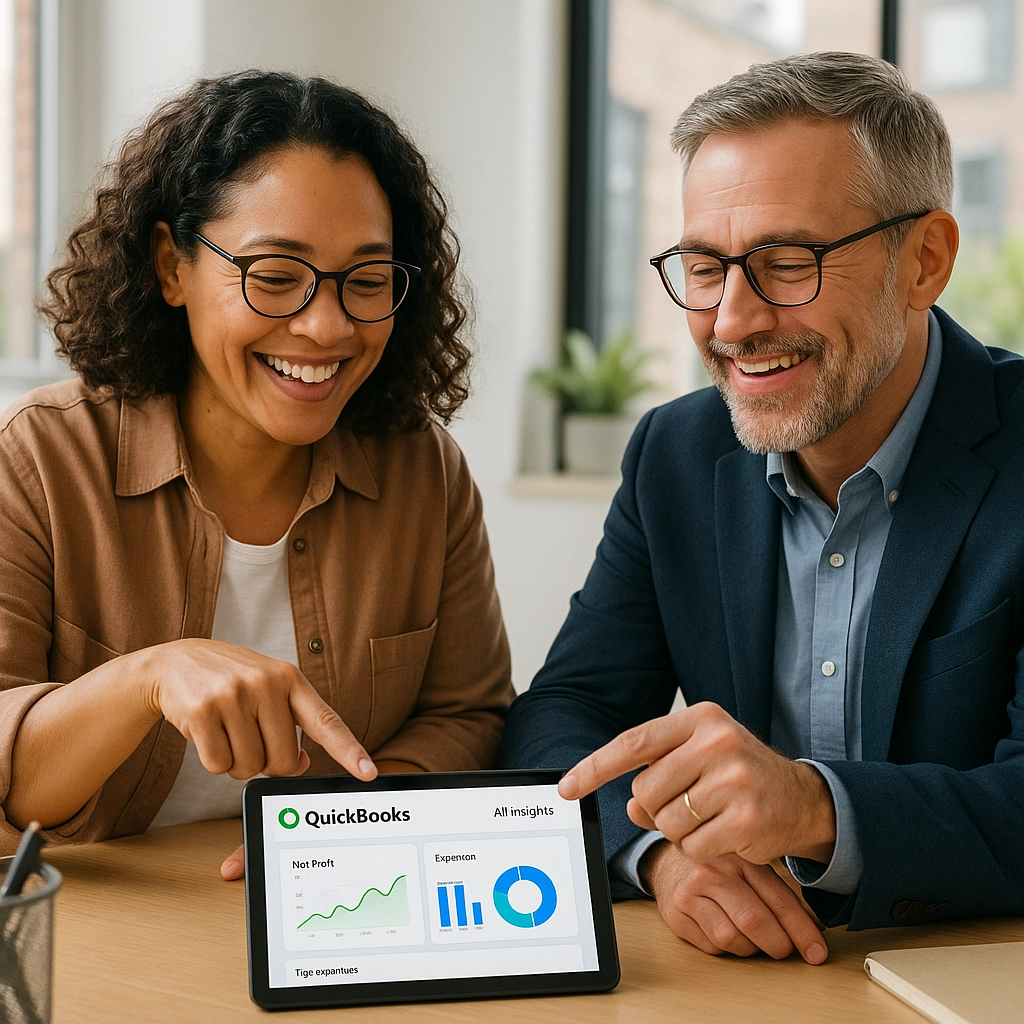
In fact, we're finding that the businesses getting the most value from QuickBooks' AI agents are those that pair the technology with strategic guidance from an accounting professional. The AI handles the day-to-day bookkeeping, while the accountant helps interpret the insights and develop action plans.
Getting Started: Implementing AI Agents in Your Business
If you're ready to bring AI accounting assistants into your business, here's how to make the transition smooth:
1. Clean Up Your Current Books
Before the AI can work effectively, your existing financial data needs to be reasonably organized. This doesn't mean perfect, but major inconsistencies should be addressed.
2. Learn the Basics of the System
While the AI is designed to be intuitive, spending an hour learning the dashboard and notification systems will help you get maximum value from day one.
3. Establish Review Routines
AI works best with human oversight. Set a regular schedule—perhaps weekly—to review the AI's categorizations and suggestions, especially in the first few months.
4. Customize Your Settings
Take time to configure the system for your specific business needs. Set your priorities for notifications, customize your dashboard, and establish which decisions you want the AI to make automatically versus which require your approval.
5. Partner With an AI-Savvy Accounting Professional
Look for an accountant who understands how to leverage these tools to provide higher-level service. At Your Business Accountant, we've trained extensively on integrating our expertise with QuickBooks' AI capabilities.
Looking Ahead: Where Accounting AI Is Going Next
This is just the beginning of the AI revolution in small business accounting. Based on current development trends, here's what we can expect in the next 12-24 months:
- Even more sophisticated cash flow forecasting using broader economic indicators
- Integration with inventory management systems to optimize purchasing
- Enhanced fraud detection capabilities using pattern recognition
- More natural language interfaces for asking complex financial questions
- Deeper integration with business planning tools to connect financial data with strategic goals
The Bottom Line: What This Means For Your Business
QuickBooks' AI agents represent a fundamental shift in small business accounting—from a backward-looking record-keeping function to a forward-looking strategic tool. The businesses that adapt quickly to these tools gain a significant competitive advantage through better financial visibility, reduced administrative burden, and more informed decision-making.
For most small business owners, the question isn't whether to adopt these tools, but how quickly you can integrate them into your operations. The time and insights gained are simply too valuable to ignore.
Want to learn more about implementing AI accounting tools in your small business? Check out our Business Success Training or contact us for personalized guidance on making the most of these powerful new tools.
By embracing the right combination of artificial intelligence and human expertise, you can transform your approach to business finances—spending less time on bookkeeping and more time on growth, innovation, and the reasons you started your business in the first place.
Comments