.png)
The Ultimate Guide to Year-End Financial Reports: Everything You Need for Tax Season Success
As we approach the final stretch of 2025, it's time to get serious about your year-end financial reports. I know, I know – it's not exactly the most exciting topic to think about during the holiday season, but trust me, putting in the work now will save you major headaches come tax time.
Let's break down everything you need to know about creating rock-solid year-end financial reports that'll make tax season a breeze (well, as breezy as tax season can be!).
Why Year-End Financial Reports Matter More Than You Think
Before we dive into the nitty-gritty, let's talk about why these reports are so crucial. Your year-end financial reports aren't just paperwork to satisfy the IRS – they're a powerful tool for understanding your business's health and setting yourself up for success in the coming year.
These reports help you:
Identify trends in your revenue and expenses
Spot areas where you're hemorrhaging money
Make informed decisions about next year's budget
Maximize your tax deductions
Keep your accountant (and the IRS) happy

The Big Three: Essential Financial Reports You Need
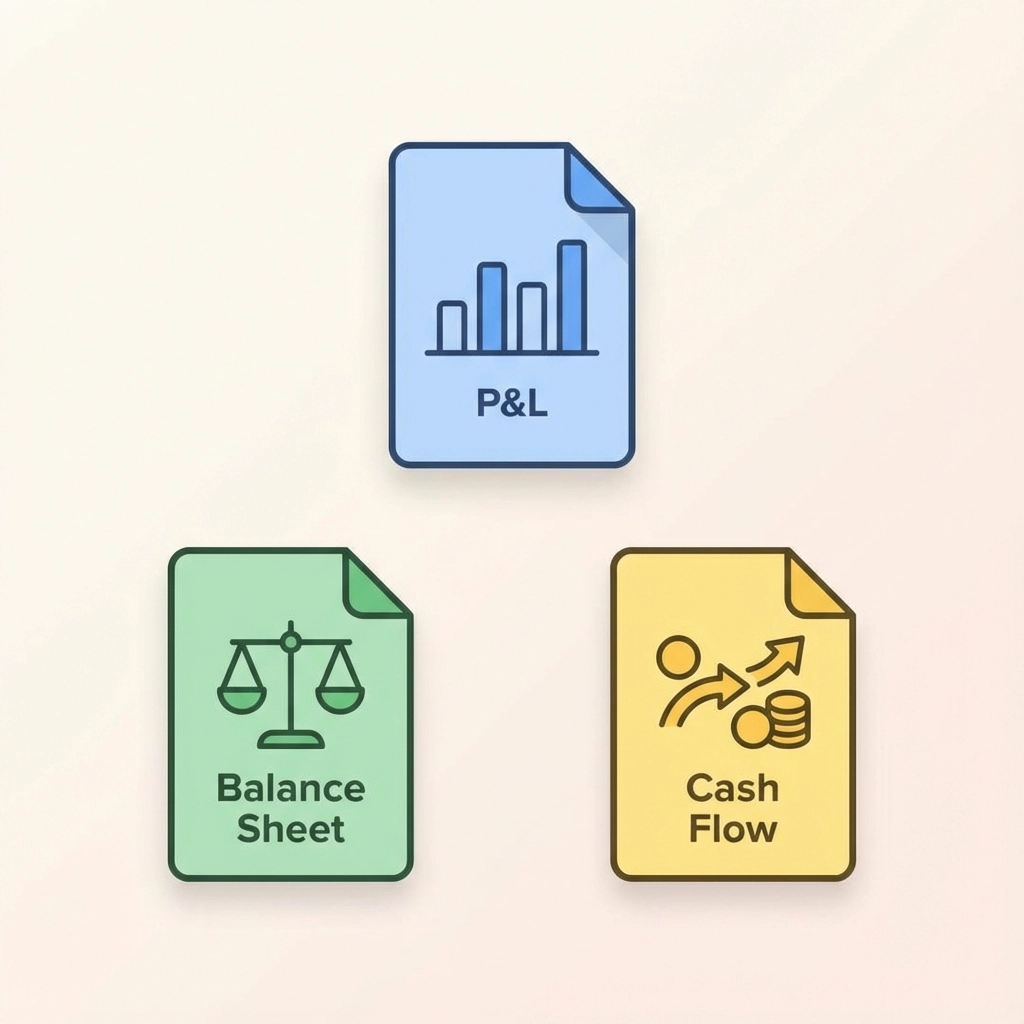
There are three main financial reports that form the backbone of your year-end package. Think of them as the holy trinity of business financials.
1. Profit & Loss Statement (P&L)
Your P&L statement is like a movie of your business's financial performance over the entire year. It shows:
Total revenue (all the money coming in)
Cost of goods sold (direct costs to produce your product/service)
Operating expenses (everything else you spend to run the business)
Net income (what's left after all expenses)
How to Read Your P&L Like a Pro:
Look for trends month-to-month – are there seasonal patterns?
Calculate your gross profit margin (gross profit ÷ revenue)
Identify your biggest expense categories
Compare this year's numbers to last year's
2. Balance Sheet
If your P&L is a movie, your balance sheet is a snapshot. It shows your financial position at a specific point in time (typically December 31st). The balance sheet follows this equation: Assets = Liabilities + Owner's Equity.
Key things to check:
Cash balances (are you cash-heavy or cash-poor?)
Accounts receivable aging (who owes you money?)
Inventory levels (are you sitting on too much stock?)
Debt levels (how leveraged are you?)
3. Cash Flow Statement
This report tracks how cash actually moved through your business. It's divided into three sections:
Operating activities (day-to-day business operations)
Investing activities (buying/selling equipment, investments)
Financing activities (loans, owner contributions/withdrawals)
Your Year-End Closeout Checklist
Ready to tackle this like a boss? Here's your step-by-step checklist to ensure nothing falls through the cracks:
Phase 1: Account Reconciliation (Start Here!)
Bank Accounts:
Reconcile all checking accounts through December 31st
Reconcile all savings accounts
Match credit card statements to your records
Review and record any bank fees or interest
Other Accounts:
Reconcile merchant accounts (PayPal, Square, Stripe)
Update loan balances and verify interest calculations
Review investment account statements
Pro tip: Don't just match balances – actually review each transaction. You'd be surprised how many duplicate charges or errors you'll find!
Phase 2: Revenue Recognition
Record all December sales, even if payment hasn't been received
Issue invoices for any work completed but not yet billed
Review 1099s you'll need to issue to contractors
Double-check sales tax calculations and payments
Phase 3: Expense Management
Enter all receipts and bills through December 31st
Review credit card statements for missing expenses
Calculate depreciation on equipment and assets
Accrue for expenses incurred but not yet paid (utilities, etc.)
Review prepaid expenses and adjust accordingly
Common expenses people forget:
Professional licenses and subscriptions
Software subscriptions paid annually
Insurance that was prepaid
Office supplies purchased in bulk

The Document Hunt: What You Need to Gather
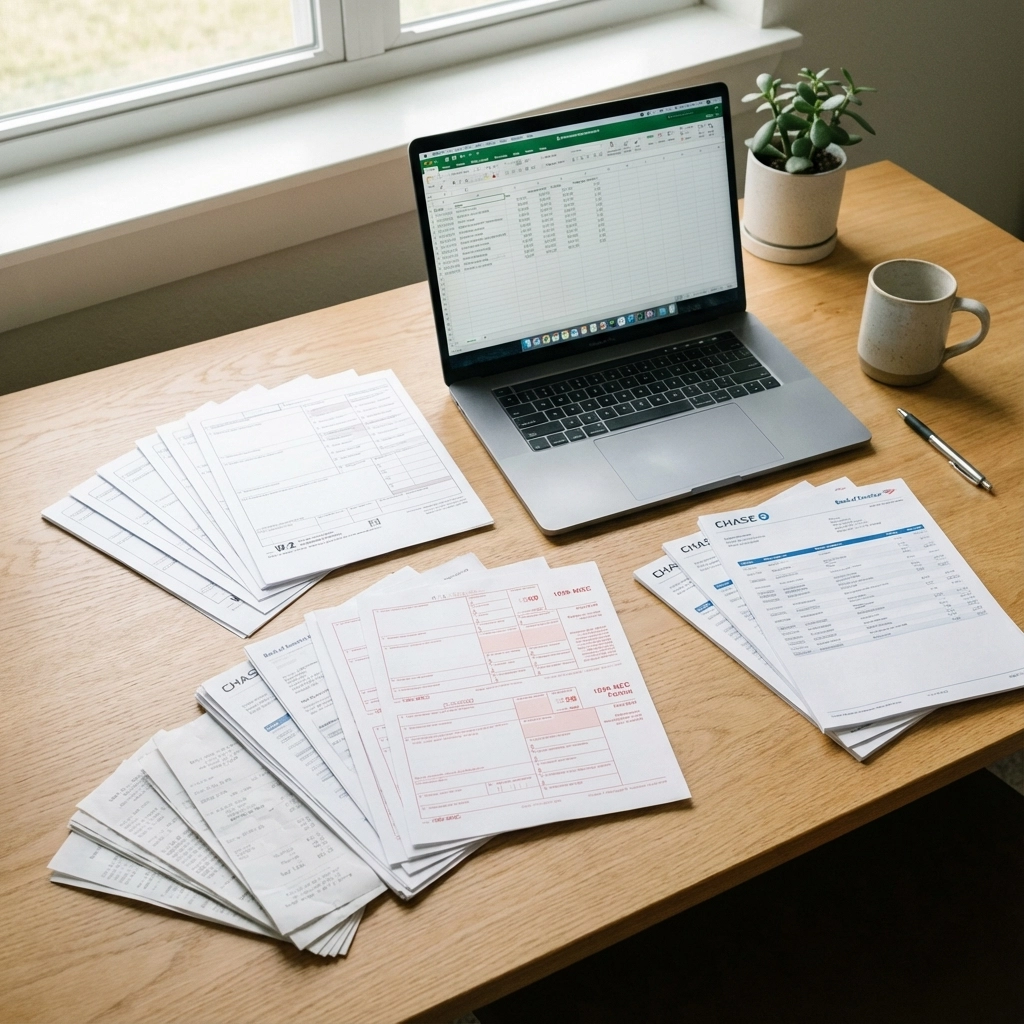
Nothing's worse than scrambling to find paperwork in February when your tax deadline is looming. Start collecting these documents now:
Income Documents
W-2s from any employment
1099-MISC for contract work
1099-NEC for non-employee compensation
1099-K from payment processors
Bank statements showing interest earned
Investment statements (1099-DIV, 1099-INT, 1099-B)
Expense Documentation
Receipts for business expenses (meals, travel, supplies)
Home office expense calculations
Vehicle mileage logs
Professional development and training costs
Equipment purchases over $2,500 (for depreciation)
Health insurance premiums (if self-employed)
Other Important Documents
Loan statements and interest paid
Property tax statements
Estimated tax payment records
Prior year tax returns (for comparison)
Advanced Tips for Reading Your Reports
Once you've got your reports generated, here's how to dig deeper and extract valuable insights:
Ratio Analysis
Calculate these key ratios to benchmark your performance:
Gross Profit Margin: (Revenue - COGS) ÷ Revenue
Current Ratio: Current Assets ÷ Current Liabilities
Debt-to-Equity Ratio: Total Debt ÷ Owner's Equity
Trend Analysis
Don't just look at the numbers – look at the trends:
Is revenue growing quarter-over-quarter?
Are expenses growing faster than revenue?
What's your cash burn rate?
Industry Benchmarking
Compare your key metrics to industry averages. If your gross margin is significantly lower than competitors, you need to investigate why.
Common Year-End Mistakes to Avoid
I've seen these mistakes countless times, and they can really mess up your financial picture:
The "Oops, I Forgot" Mistakes:
Not recording December sales until January
Forgetting to accrue expenses
Missing depreciation calculations
Not reconciling all accounts
The "I'll Deal With It Later" Mistakes:
Postponing difficult reconciliations
Ignoring small discrepancies that add up
Not following up on missing documentation
The "Close Enough" Mistakes:
Rounding numbers instead of being precise
Making assumptions instead of researching
Not reviewing prior year comparisons
Technology That Makes This Easier
If you're still doing this stuff manually, you're making your life way harder than it needs to be. Modern accounting software can automate most of these processes:
QuickBooks Online: Great for most small businesses
Xero: User-friendly with excellent bank feed integration
FreshBooks: Perfect for service-based businesses
These platforms can automatically categorize transactions, reconcile accounts, and generate reports with just a few clicks.
Setting Yourself Up for Next Year
While you're in the thick of year-end work, take some time to set yourself up for success in 2026:
Schedule monthly financial reviews
Set up automatic bank feeds
Create expense tracking systems
Plan for estimated tax payments
Set financial goals based on this year's performance
Final Thoughts
Look, I get it – year-end financial reports aren't exactly thrilling. But think of them as the foundation for everything else you want to accomplish in your business. The insights you gain from this process will guide your decisions, help you grow smarter, and keep you out of trouble with the tax authorities.
Start now, take it step by step, and don't be afraid to ask for help if you need it. Your future self (especially the one dealing with tax season) will thank you for putting in the work now.
Remember, good financial reports aren't just about compliance – they're about building a stronger, more profitable business. So roll up your sleeves, grab your favorite caffeinated beverage, and let's get these reports done right!
Comments